
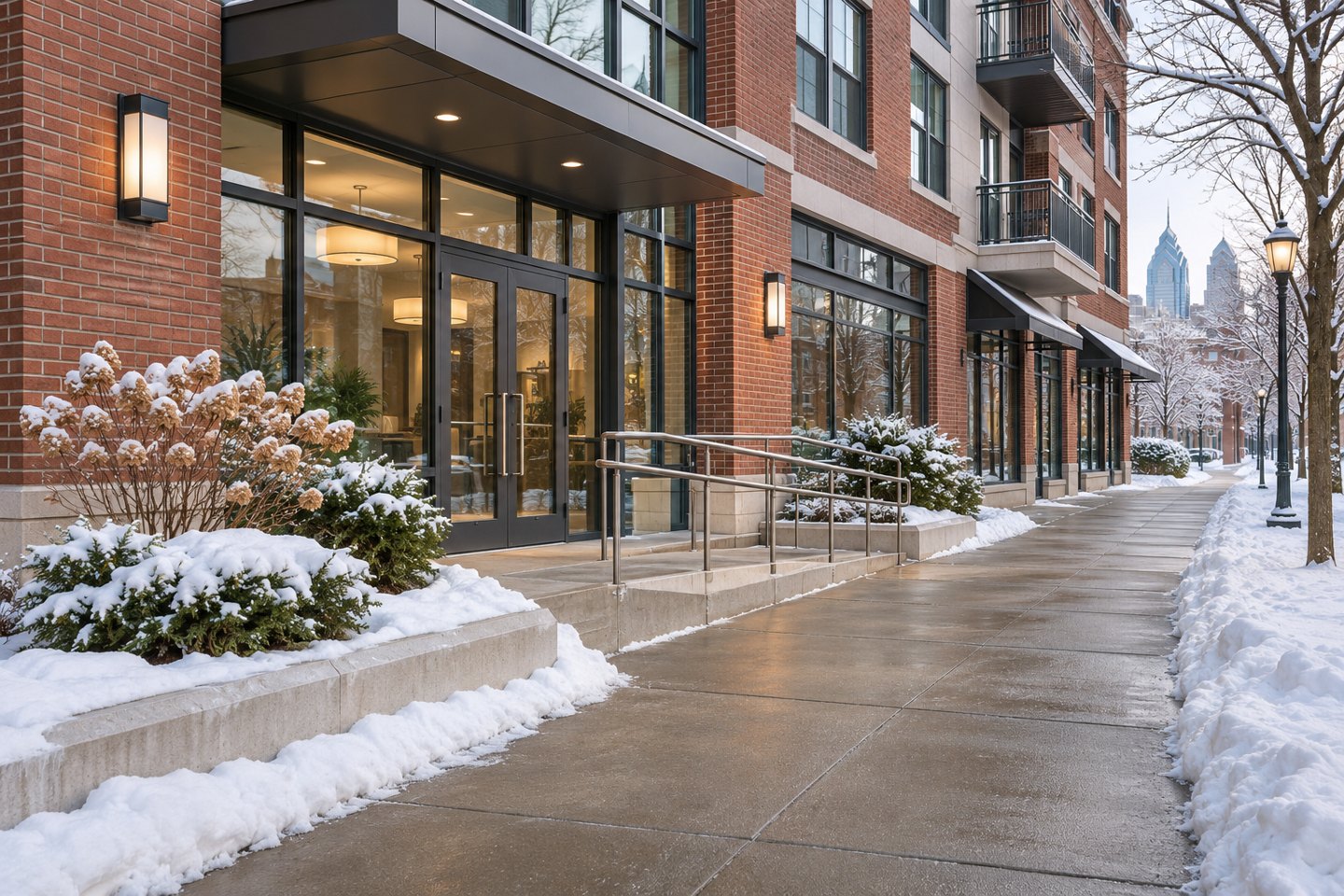
The first real snow of the season has a way of exposing every gap in a property’s winter plan. The plow contractor shows up late, nobody is sure who salts the rear stairs, and the board starts getting emails before the coffee is brewed. For commercial owners, HOA and condo boards, and property managers across Greater Philadelphia, late November is the right time to settle these questions on paper, while the sidewalks are still dry.
Here is a practical checklist to help you get your snow and ice plan in order before the forecast forces the issue.
1. Know the City’s Basic Sidewalk Expectations
If your property is in Philadelphia, the City reminds property owners to clear a sidewalk path at least 36 inches wide within six hours of the end of a storm. The City also says snow should not be shoveled or plowed into the street, keep fire hydrants clear, and clear snow from nearby sewer drains so melting snow can drain. These reminders appear in the City’s own snow emergency updates, such as its January 2026 snow emergency update.
Properties in the suburban counties should check with their own township or borough, since local ordinances vary. Whatever the local rule, write the requirement into your plan and your vendor contract so the clock starts for everyone at the same moment.
2. Put the Snow Contract in Writing, With Clear Triggers
Many winter headaches trace back to a vague agreement. Before the first storm, confirm that your snow and ice contract spells out:
- Trigger depth: at what accumulation the contractor plows (for example, a set number of inches) and whether salting happens at any accumulation or ice event.
- Scope: parking lots, drive aisles, sidewalks, entrances, stairs, ramps, loading docks, dumpster pads, fire lanes and hydrants.
- Response times: how quickly crews arrive after the trigger is met, and how often they return during a long storm.
- Pricing model: per push, per event, per season or hourly, and how materials like salt or ice melt are billed.
- Snow stacking: where piles go, so they do not block sight lines, parking, drainage or emergency access.
- Insurance: current certificates of insurance naming the owner or association as required by your agreement.
If a contract already exists from last year, read it again. Rates, scope and contacts often change between seasons.
3. Map the Property and Assign Every Area
A simple site map is one of the most useful winter tools you can have. Mark each area and note who is responsible for it: the plow contractor, the building’s maintenance staff, a tenant under its lease, or individual unit owners under the association’s governing documents.
For commercial properties, review leases to see which snow and ice duties fall on tenants and which are landlord responsibilities or recoverable through CAM. For condos and HOAs, check the declaration and rules for who handles private walkways, patios and driveways. Gaps usually live at the edges: the back stairs, the side door used by staff, or the walkway between two buildings.
4. Stock Up and Check Equipment Now
Salt and ice melt can be harder to find once a storm is in the forecast. Before December:
- Confirm on-site supplies of ice melt, and consider products suited to concrete, pavers and landscaping near entrances.
- Inspect shovels, spreaders and any snow blowers owned by the property.
- Check that entrance mats are in good shape to reduce slippery lobby floors.
- Verify that exterior lighting works along walkways and parking areas, since winter darkness arrives early.
5. Watch Gutters, Downspouts and Drainage
Ice problems often start on the roof. Clogged gutters and downspouts that discharge onto walkways can create refreeze patches that return night after night. Walk the property, identify where meltwater crosses a sidewalk or parking area, and fix or redirect it before the freeze-thaw cycle begins. Keep storm drains clear on the property and, in Philadelphia, keep nearby inlets clear as the City asks.
6. Document Every Storm
Good records protect owners, boards and managers. For each event, keep a simple log of when snow started and stopped, when crews arrived and left, what areas were plowed or treated, and any complaints or incidents. Ask your contractor for service tickets or GPS-stamped reports if they offer them, and save dated photos of cleared areas. If a slip-and-fall claim or billing dispute arises months later, this log is far more useful than anyone’s memory.
7. Communicate Before and During Storms
Tenants and residents handle winter better when they know the plan. Before the season, send a short notice that explains how snow removal works, where to park during plowing, how to report icy spots, and any responsibilities they have under their lease or the association rules. During a storm, a quick update about plowing schedules saves the manager dozens of individual calls.
8. Build Winter Into the Budget
Snow removal costs vary widely from year to year, which makes budgeting tricky for boards and owners alike. Review what the last few winters actually cost, compare that to the contract pricing model, and decide how the budget will handle a heavier-than-expected season. Seasonal contracts give more predictability; per-push pricing can cost less in a mild year but more in a hard one. Your manager can help the board weigh the trade-offs.
Key Takeaways
- In Philadelphia, the City asks owners to clear a 36-inch sidewalk path within six hours after a storm ends and not to push snow into the street.
- Put triggers, scope, response times, pricing and snow stacking areas in a written contract.
- Use a site map to assign every walkway, stair and entrance to a responsible party.
- Stock ice melt and check equipment and lighting before December.
- Fix gutters and drainage that cause refreeze on walkways.
- Keep a storm-by-storm log with times, areas serviced and photos.
- Tell tenants and residents how the winter plan works before the first storm.
Get Ready Before the First Flake
A good snow and ice plan is mostly preparation: clear contracts, clear responsibilities and clear records. If you would like help reviewing your winter contract, mapping responsibilities or communicating with tenants and owners, contact Quinn & Wilson at CommercialPMPA. And if you want a simpler way to track vendors, work orders and resident communication all season long, try Bysania property management software.