
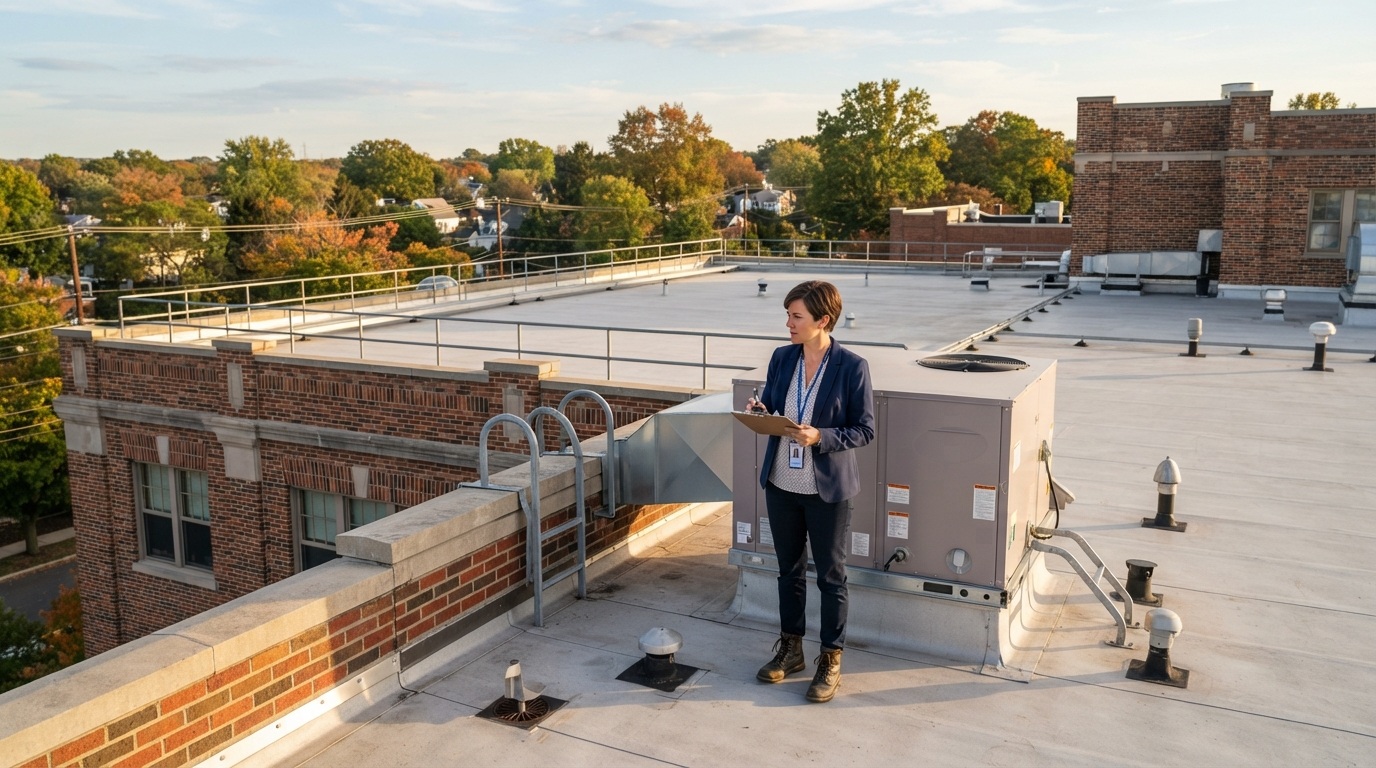
As September settles over Greater Philadelphia, the shift from summer humidity to autumn crispness signals a practical window for property owners. From Center City masonry buildings to suburban office parks in King of Prussia and multifamily assets across the Delaware Valley, this is a useful time to address preventative maintenance before heating season begins.
Commercial, mixed-use, multifamily, and condo/HOA properties in the region face fluctuating autumn temperatures, seasonal precipitation, and winter freeze-thaw cycles. Preparing mechanical systems and the building envelope now can help reduce the risk of emergency repairs, tenant dissatisfaction, and system failures later.
A structured September walkthrough helps property managers and owners move from reactive emergency responses toward proactive asset protection.
Key Takeaways
- Schedule licensed HVAC inspections before peak winter demand.
- Clear roof drainage and document any membrane or flashing concerns.
- Verify required life safety inspections and keep exits unobstructed.
- Protect exposed piping and address envelope air or moisture leaks.
- Confirm snow and ice plans, contacts, priorities, and documentation.
- Communicate seasonal procedures clearly with occupants.
Editorial disclaimer: This article provides general operational guidance for property maintenance. It does not constitute legal, engineering, or professional building diagnostic advice. Property owners should consult qualified licensed contractors, engineers, and legal counsel regarding specific building needs, structural assessments, or regulatory compliance requirements.
1. Schedule a Professional HVAC Inspection
Before the first sustained cold snap, arrange for a licensed HVAC technician to inspect heating systems. Commercial rooftop units, boilers, and heat pumps that have been dormant or lightly loaded since spring deserve attention.
A pre-season tune-up may include burner and heat exchanger checks, component inspection, filter replacement, airflow review, and economizer or control testing where applicable. Identifying a failing motor or degraded component early can allow repairs to be scheduled before peak winter demand.
2. Evaluate Roof and Drainage Systems
Greater Philadelphia winters can bring wet precipitation followed by freezing temperatures. Many local commercial properties have flat or low-slope roofs that depend on clear drainage.
Before autumn leaves clog drainage paths, remove debris from gutters, downspouts, scuppers, and interior roof drains. Ask a qualified roofing professional to inspect applicable roof membranes, seams, flashing, penetrations, parapets, and areas where water remains after rain.
3. Test and Inspect Fire Suppression and Life Safety Systems
Heating season is a practical time to verify that fire protection and life safety systems are maintained. Schedule required professional inspections for the property’s sprinkler systems, fire pumps, standpipes, alarms, detectors, and extinguishers.
Confirm that emergency exits, stairwells, and fire escapes are free of storage and obstructions. Follow applicable requirements, manufacturer instructions, and qualified professional advice.
4. Insulate Exposed Pipes
Older Philadelphia-region buildings may have water lines running through unheated basements, crawl spaces, utility rooms, or exterior-facing cavities. Identify vulnerable piping and use insulation suitable for the pipe and environment.
Seal appropriate drafts while preserving required ventilation and fire assemblies. Ask a qualified professional whether listed heat-trace products are appropriate for persistently cold locations.
5. Inspect Weatherstripping and the Building Envelope
Heat loss and moisture intrusion can occur around doors, windows, roof transitions, masonry joints, and penetrations. Inspect weatherstripping, storefront glazing, loading-dock seals, perimeter sealant, flashing, mortar joints, staining, and spalling.
Record recurring drafts or moisture patterns and have questionable conditions evaluated before winter cycling worsens them.
6. Audit Outdoor Lighting and Electrical Systems
Complete a dusk walkthrough of entrances, paths, stairs, parking areas, loading zones, service areas, and signage. Identify failed lamps, damaged fixtures, uneven illumination, malfunctioning controls, and compromised exterior covers.
Have unsafe wiring or water intrusion evaluated by a qualified electrician.
7. Review the Snow Removal and De-Icing Strategy
Finalize snow and ice management arrangements before winter demand rises. Define priority areas, service triggers, repeat visits, authorization for extra work, storm monitoring, site hazards, snow-storage locations, equipment readiness, material storage, and service documentation.
Select de-icing materials for the site’s surfaces, occupants, landscaping, and environmental needs, following manufacturer guidance.
8. Check Common-Area Climate Controls
Test common-area thermostats and sensors, update operating schedules, investigate spaces that run unusually hot or cold, and protect vulnerable utility or perimeter zones.
Qualified technicians can assess dampers, valves, pumps, vents, controls, and building automation settings where applicable.
9. Communicate Proactively with Occupants
Send a concise seasonal transition notice covering system changeover, planned testing, occupant responsibilities, property rules for portable heaters, issue-reporting procedures, and daytime and after-hours contacts.
Ask occupants to report drafts, leaks, unusual odors, alarm chirps, uneven heating, and damaged exterior fixtures promptly.
September Walkthrough Summary Table
| Check | Timing | Responsible Trade or Role |
|---|---|---|
| HVAC inspection | Early September, before peak demand | Licensed HVAC technician |
| Roof and drainage | September, before leaf accumulation | Roofing professional and maintenance crew |
| Fire and life safety | September, per required inspection schedule | Licensed fire protection contractor |
| Pipe insulation | September, before first freeze risk | Plumbing or mechanical contractor |
| Building envelope | September, during dry weather | Building envelope or general contractor |
| Outdoor lighting and electrical | September dusk walkthrough | Licensed electrician and property staff |
| Snow and ice plan | September, before contracts lock in | Property manager and snow removal vendor |
| Common-area climate controls | September, before heating changeover | HVAC controls technician |
| Occupant communication | Mid to late September | Property manager |
Preparedness Prevents Panic
Heating-season readiness does not need to be reactive. A systematic September walkthrough helps Greater Philadelphia property owners and managers identify priorities, coordinate qualified contractors, document unresolved risks, and enter winter with a clearer operating plan.
Plan Your Heating-Season Walkthrough
Commercial PM PA supports commercial, multifamily, mixed-use, and association properties across the Delaware Valley. Contact us to discuss a practical heating-season plan for your property.