
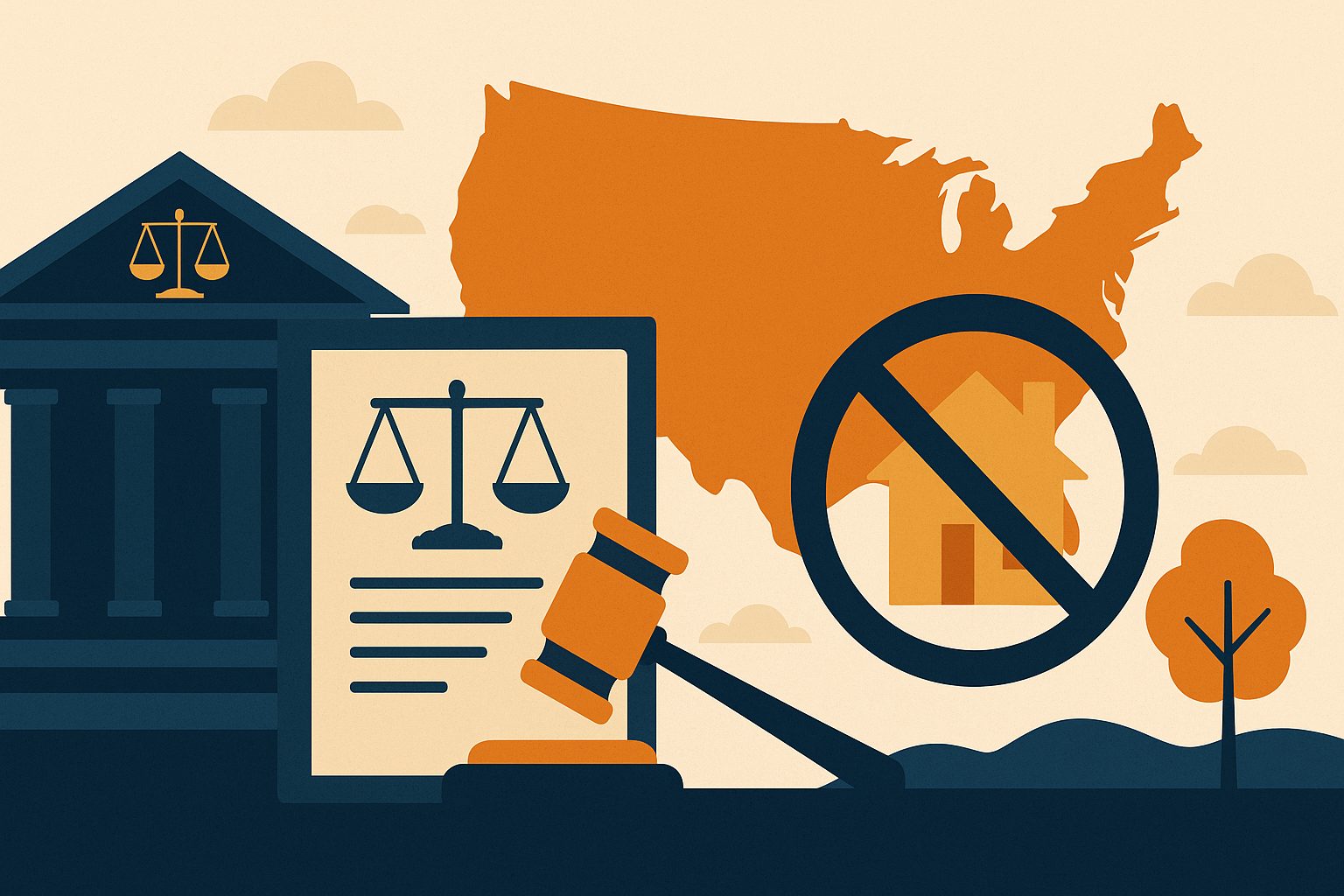
Eminent Domain in the United States and Pennsylvania: Balancing Public Good and Private Rights
Introduction
Eminent domain is a longstanding legal doctrine allowing governments to take private property for public use, provided that the property owner receives “just compensation.” This principle, enshrined in the Fifth Amendment of the U.S. Constitution, is fundamental to the development of public infrastructure—such as highways, schools, and utilities—but it frequently stirs controversy. At the heart of eminent domain debates is the tension between the collective needs of society and the individual rights of property owners. This article delves into the legal framework of eminent domain at the national level, explores Pennsylvania’s distinctive laws and practices, and examines ongoing disputes and reforms.
Eminent Domain in the U.S.
The federal Constitution’s Takings Clause—part of the Fifth Amendment—states: “nor shall private property be taken for public use, without just compensation.” For much of American history, “public use” was interpreted narrowly, encompassing essential public projects like transportation, defense, and schools.
However, the Supreme Court’s 2005 decision in Kelo v. City of New London dramatically broadened the definition of public use to include economic development. In this landmark case, the Court ruled that local governments could seize private property and transfer it to private developers if the project was expected to bring economic benefits, such as jobs and increased tax revenue. This decision was highly controversial and led to a significant backlash: within a year, 44 states passed laws or constitutional amendments to restrict the use of eminent domain for private development, aiming to restore a stricter, more traditional interpretation of “public use.”
Pennsylvania’s Legal Framework
In Pennsylvania, the state constitution closely follows federal standards but adds important safeguards. Article I, Section 10 affirms the principle of just compensation and limits takings to purposes genuinely serving the public. After Kelo, Pennsylvania responded by passing Act 34 in 2006, which prohibits the use of eminent domain for private enterprise, with the major exception of properties deemed “blighted.”
Under Pennsylvania’s Urban Redevelopment Law, “blight” can be declared for properties that are structurally unsafe, lack basic utilities, or are otherwise deemed “economically undesirable.” While intended to facilitate revitalization, critics argue that these definitions can be vague, allowing for potential misuse, especially in neighborhoods targeted for new development.
Key Cases in Pennsylvania
- Norwood v. Horney (2006): Although an Ohio case, Norwood influenced Pennsylvania and other states by rejecting the taking of private property for private development based solely on blight, pushing for greater property owner protection.
- In re Condemnation by the Redevelopment Authority of Lawrence County (2014): Here, Pennsylvania courts upheld land condemnation for a railroad project supporting a private coal company, reasoning that job creation and economic benefit justified the taking as a public use. This case highlights the fine line between public and private interests.
Controversies and Challenges
The use of eminent domain in Pennsylvania has generated significant controversy, especially regarding blight designations and compensation. Critics argue that blight criteria are sometimes manipulated to facilitate redevelopment in lower-income neighborhoods, resulting in the displacement of residents. High-profile projects, like Philadelphia’s NFL stadiums and the PennEast Pipeline, have fueled accusations of favoring private interests under the pretext of public benefit.
Another major issue is the adequacy of compensation. Property owners sometimes contend that government offers do not reflect true market value or account for intangible losses such as community ties and business goodwill.
Current Debates and Reforms
Recognizing these concerns, Pennsylvania policymakers and advocates have pushed for further reforms, including:
- Stricter Blight Definitions: Advocates want blight to be determined by clear, objective standards—such as structural dangers or health hazards—rather than subjective or economic criteria.
- Increased Transparency: Reforms seek more public notice, community hearings, and opportunities for residents to voice concerns before properties are condemned.
- Improved Compensation: There are efforts to ensure that compensation covers full market value, moving costs, and even emotional distress.
- Right-to-Reclaim Provisions: Some suggest that if a project does not proceed within a specified timeframe, former owners should be able to reclaim their property.
Conclusion
Eminent domain is an essential governmental tool for facilitating growth and public improvements, but it remains fraught with difficult trade-offs. In Pennsylvania, ongoing reforms reflect society’s struggle to balance collective benefits with the sanctity of private property rights. As infrastructure and redevelopment needs evolve, so too will the debate over how best to protect individual rights while enabling progress. Continued vigilance and advocacy for fair procedures are essential to ensuring that eminent domain serves the public good without undermining the rights of property owners.