
Understanding the Different Types of Shopping Centers
Classifications based on size and type of goods/services offered
Shopping centers are a foundational component of the retail ecosystem, providing convenient access to goods and services across various consumer markets. These centers vary widely in scale, design, and purpose, often categorized by their size and the kinds of businesses they host.
This guide outlines the major types of shopping centers, from the largest super-regional malls to the smallest strip malls, including their defining characteristics and typical trade areas.
General Purpose Centers
Super-Regional Mall
- Size: 800,000+ square feet
- Enclosed, climate-controlled with inward-facing stores and a common walkway
- Multiple full-line department store anchors
- Offers general merchandise, fashion, and often entertainment venues
- Parking surrounds the mall
- Trade area: 25+ miles
Regional Mall
- Size: 400,000–800,000 square feet
- Enclosed, similar layout to super-regional but smaller in scale
- Typically one full-line department store anchor
- Focuses on fashion and general merchandise
- Parking surrounds the property
- Trade area: 5–15 miles
Community-Based Centers
Neighborhood Center
- Size: 30,000–150,000 square feet
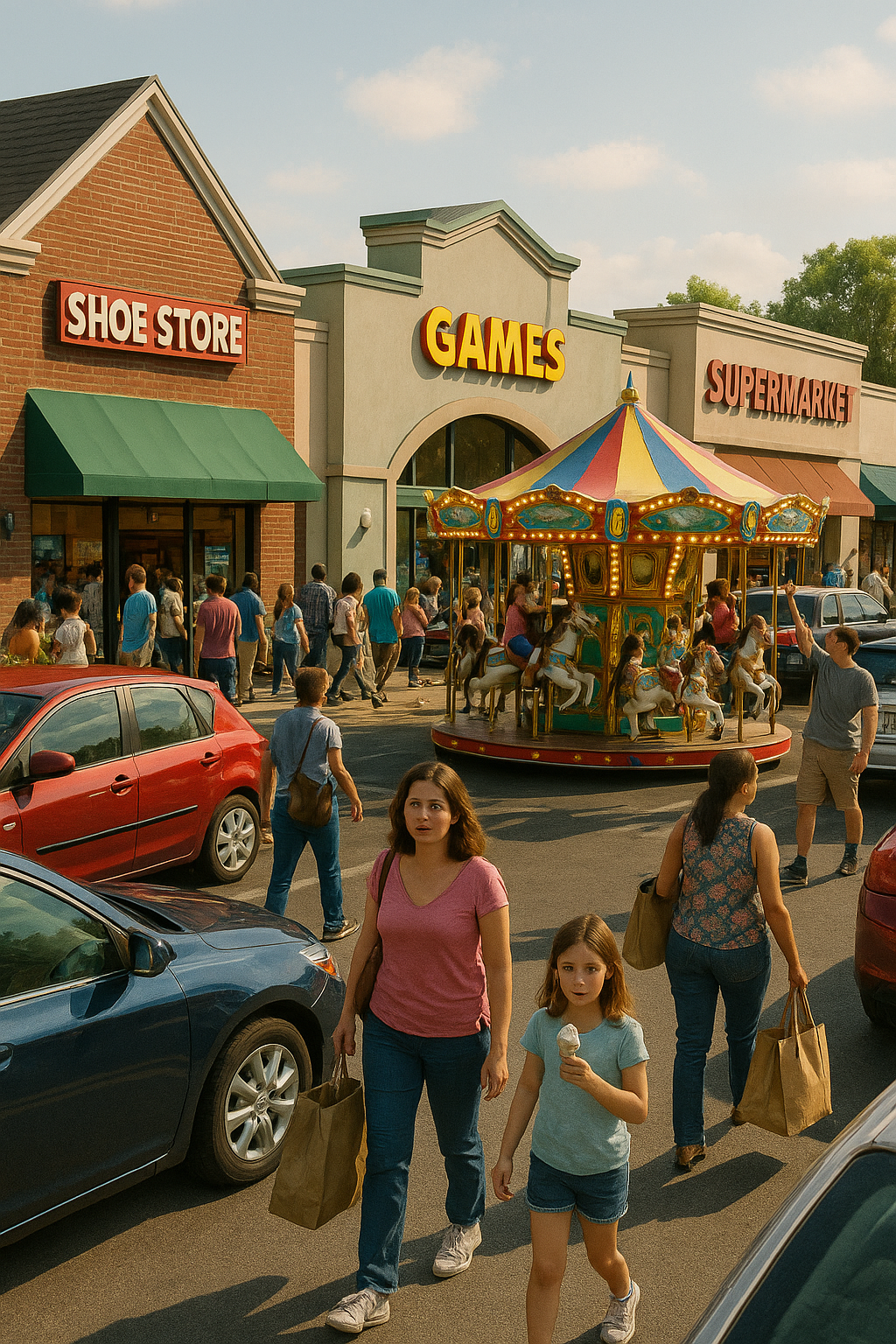
- Open-air layout
- Typically anchored by a supermarket
- Includes service-based tenants like barbershops, dry cleaners, and convenience stores
- Trade area: Approximately 3 miles
Strip Mall / Convenience Center
- Size: Less than 30,000 square feet
- Open-air with stores in a row, or arranged in an L or U shape
- Anchor tenants include mini marts or fast food outlets
- Located along major roads with high visibility
- Trade area: Less than 1 mile
Specialized Center
Factory Outlet Center
- Can be larger than super-regional malls
- Usually located outside major metro areas to reduce land costs
- Hosts brand-name outlet stores offering discounted goods
- Open-air or hybrid layout with significant parking
- Trade area: 25–75 miles
- Represents about 1% of the retail industry
Conclusion
Shopping centers fulfill various commercial and community needs, ranging from high-end destinations like super-regional malls to local service hubs such as neighborhood and strip centers. Specialized centers like factory outlets add diversity by targeting specific market segments.
Understanding these classifications helps retailers choose the right location, developers plan effectively, and consumers find what they need more efficiently. As retail continues to evolve, shopping centers will increasingly emphasize experience, mixed-use development, and service integration.
Types of Shopping Centers
Classified by size, anchor tenant, and trade area
Super-Regional Mall
- Size: 800,000+ sq ft
- Enclosed, multiple department store anchors
- Fashion, entertainment, general merchandise
- Trade area: 25+ miles
Regional Mall
- Size: 400,000–800,000 sq ft
- Enclosed, one department store anchor
- General merchandise, fashion
- Trade area: 5–15 miles
Neighborhood Center
- Size: 30,000–150,000 sq ft
- Open-air, anchored by a supermarket
- Includes barbershops, dry cleaners, etc.
- Trade area: ~3 miles
Strip Mall / Convenience Center
- Size: Up to 30,000 sq ft
- Open-air, linear or L/U shaped layout
- Anchored by mini mart or fast food
- Trade area: < 1 mile
Factory Outlet Center
- Often larger than super-regional malls
- Open-air or hybrid, outside metro areas
- Brand-name outlets with discounted goods
- Trade area: 25–75 miles