
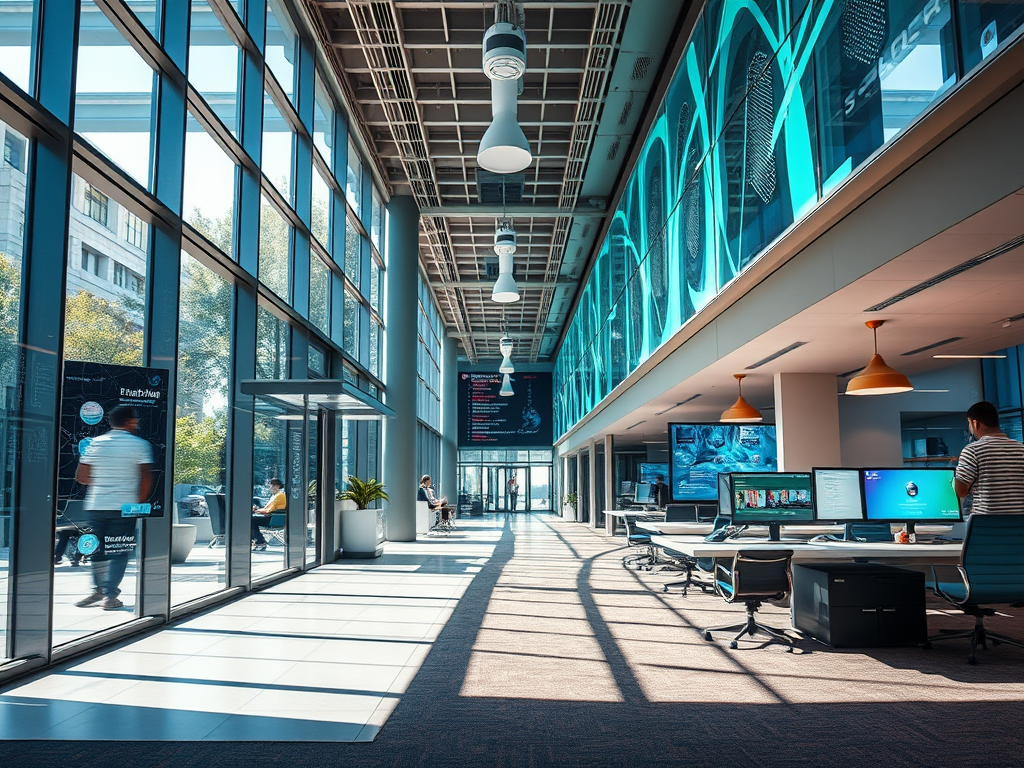
Malvern, PA 2026 — Investor Brief
Commercial real estate in Malvern and the surrounding Chester County corridor—including Exton, West Chester, and nearby King of Prussia—is undergoing one of the most compelling suburban transformations in the Greater Philadelphia region. What was once a traditional office-dominated market is now evolving into a mixed-use, innovation-driven ecosystem fueled by adaptive reuse, life sciences demand, and changing workplace dynamics. Moving into 2026, the greater eastern Pennsylvania commercial real estate markets are showing signs of stabilizing vacancy and an uptick in demand, moving beyond pandemic-era dynamics toward supply-demand equilibrium.
The Big Shift: From Office Parks to 24/7 Mixed-Use Nodes
At the center of this transformation is the Great Valley Corporate Center—historically a hub of suburban office campuses along the Route 202 corridor. Today, that same corridor is being “right-sized.” Office inventory is shrinking—not through collapse, but through strategic demolition and repurposing. Legacy buildings are making way for higher-density residential, experiential retail, and flex-lab space.
This shift is helping Malvern outperform much of suburban Philadelphia. While the broader Suburban Philadelphia office market closed 2025 with a 22.5% vacancy rate and negative net absorption, Class A office in Malvern is stabilizing, driven by a clear flight to quality. Tenants are consolidating into modern, transit-oriented, amenity-rich buildings. As demand for top-tier space tightens, suburban Class A availability decreased 40 basis points year-over-year to 27.6% in early 2026, pushing more lower-tier space onto the market.
Sector Breakdown: What’s Working Now
Office: Bifurcation Defines Opportunity
The office sector tells a tale of two asset classes:
- Class A / Trophy Assets: These properties are stabilizing, with selective leasing and modest rent growth. Major financial firms are actively filling luxury office space, and ongoing reductions in Pennsylvania’s corporate income taxes—lowering by another 50 basis points to 7.50% this year—are expected to improve the business climate and aid long-term leasing.
- Class B/C Assets: While under pressure, these assets are increasingly valuable as conversion plays. The metro’s Class B/C vacancy rate began 2026 in the low-12% band, well below the high-end level. Investors are actively targeting Class B/C properties with established tenancy, driving a 50% year-over-year increase in transactions in the $1 million to $10 million range across greater Philadelphia.
Hybrid work continues to weigh on absorption, but suburban nodes like Malvern are benefiting from companies seeking lower costs and better employee accessibility than Center City.
Industrial & Flex: Cooling, but Still a Long-Term Play
Industrial fundamentals have softened from peak pandemic highs. In Chester County, industrial vacancy rose to 11.2% by the end of 2025, with nearly 10 million square feet of inventory. However, rents remain solid at approximately $12.75 per square foot, supported by logistics and regional distribution demand.
Despite short-term oversupply, Malvern’s connectivity and proximity to major highways keep it positioned for long-term logistics, light manufacturing, and data infrastructure growth. Notably, data center development is becoming a significant factor in Chester County, with massive projects proposed in East Whiteland and Spring City, though these face increasing community scrutiny regarding power generation and density.
Retail: Quietly the Strongest Asset Class
Retail is the standout performer across the region. In prime suburban nodes like King of Prussia, retail vacancy sits at an exceptionally low 2.3% as of Q4 2025, well below national suburban averages. The market draws nearly 40 million visits annually, surpassing pre-pandemic levels.
Malvern-area retail remains tight and community-focused, driven by affluent demographics and the walkable charm of Malvern Borough’s King Street. The key trend is experiential retail—restaurants, cafes, and service-based tenants that complement residential growth. Former department store spaces are being repositioned into new anchors like Netflix House, Level99, and Dave & Buster’s, while the region emerges as a hub for electric vehicle retail.
The New Playbook: Adaptive Reuse & Mixed-Use Development
The defining investment theme in 2026 is repurposing obsolete office space. Philadelphia currently leads metro cities in office-to-apartment conversion projects, with the pipeline increasing 119% over the past year.
This project reflects a broader regional trend of transforming single-use commercial sites into live-work-play environments, though not without challenges. For instance, the ambitious plan by Abrams Realty to redevelop the Exton Square Mall into a mixed-use residential community was unanimously rejected by West Whiteland Township in late 2025 over density concerns, leading to ongoing litigation in 2026.
Economic Anchors Driving Demand
Malvern’s resilience is tied to strong institutional and corporate anchors:
- Vanguard: As a major employer, Vanguard is strengthening its local presence. In early 2026, the investment giant announced it is reclaiming hundreds of jobs previously outsourced to Infosys, bringing positions back to its Malvern headquarters and transitioning services away from the Chesterbrook subsidiary.
- Penn State Great Valley: Located within the Great Valley Corporate Center, this campus provides a vital talent pipeline, offering master’s degrees and professional development with recent multi-million dollar investments in engineering and knowledge commons facilities.
- Life Sciences leadership: Greater Philadelphia has retained its position as the #4 life sciences market in the U.S. Growth in life sciences and flex-lab space is reshaping demand in the suburbs. Campuses like the Spring House Innovation Park in Montgomery County demonstrate the viability of suburban life sciences destinations, and investors in Malvern are increasingly targeting properties that can accommodate specialized research uses.
Investment Outlook: 2026 and Beyond
Malvern is firmly in a stabilization-to-recovery phase, with several key themes for investors:
| Metric / Trend | 2026 Forecast & Data |
|---|---|
| Cap Rates | Stabilizing; Medical Office Building (MOB) cap rates range from 5.5% to 8.5%, averaging ~6.5% for portfolios. |
| Best Opportunities | Office-to-multifamily conversions, Medical office buildings (MOBs), Flex/lab repositioning, Class B/C acquisitions. |
| Demand Drivers | Low regional unemployment (Chester County at 2.6% in Dec 2025), suburban migration, anticipated interest rate easing. |
| Office Forecast | Philadelphia metro expects +0.8% employment growth, +10 bps vacancy increase to 15.8%, and positive rent growth to $25.14/SF. |
Looking ahead, broader forecasts suggest the suburban Philadelphia market will enter a full recovery cycle by late 2026, with improving absorption and transaction volume as the market digests the $213 billion in office building loans coming due nationwide.
Bottom Line for Investors
Malvern is no longer just an office market—it’s becoming a suburban innovation hub.
The winning strategy is clear:
- De-risk through quality (Class A, well-located, transit-oriented assets)
- Create value through conversion (especially obsolete office stock into residential or mixed-use)
- Lean into mixed-use density (integrating experiential retail and community spaces)
In today’s market, the most valuable square footage isn’t just where people work—it’s where they live, gather, and stay.