
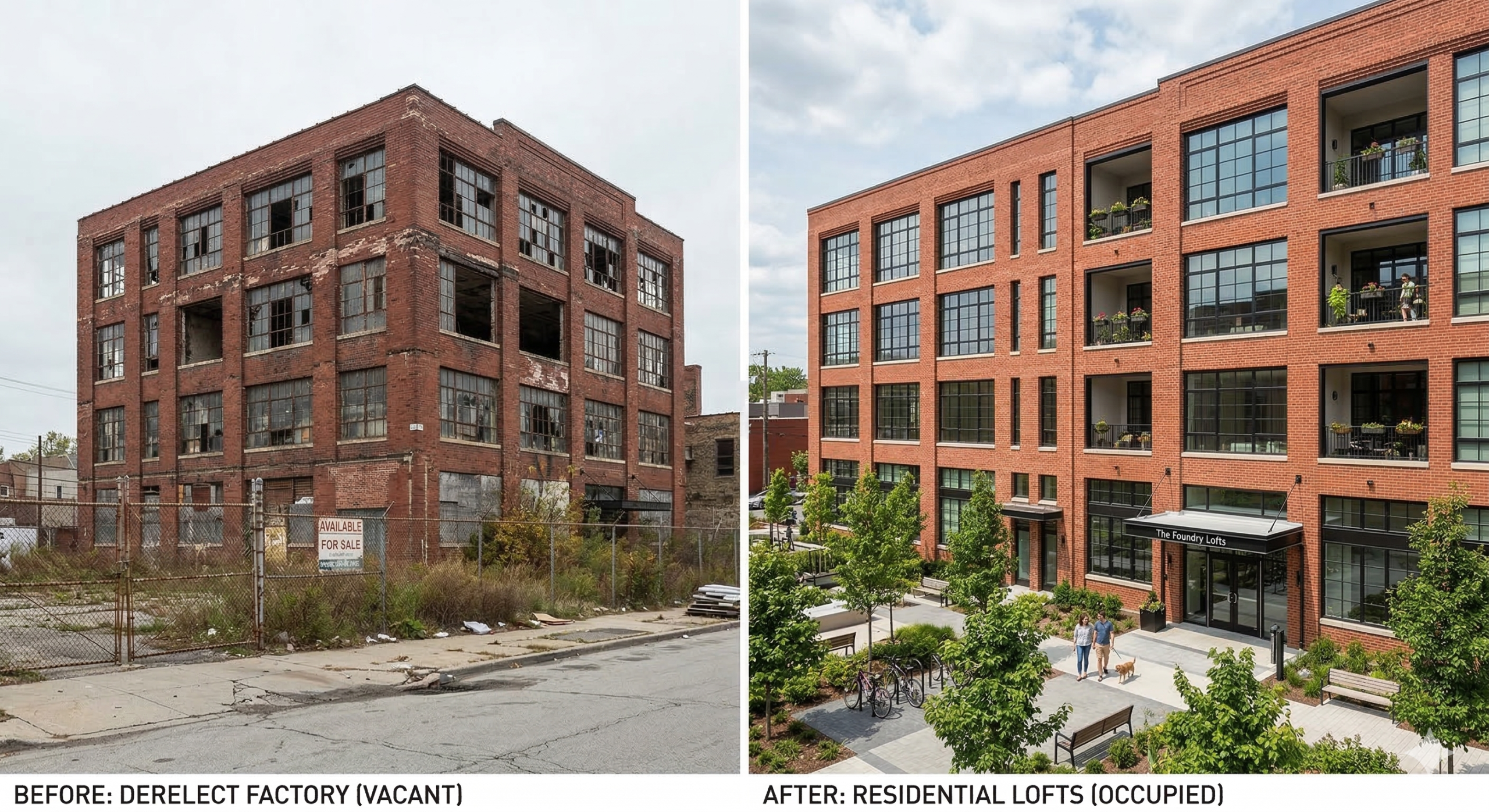
Success in real estate isn’t just about “location, location, location.” It’s about anticipation. It’s about seeing the wave before it hits the shore.
Right now, a massive shift is happening in Pennsylvania—a “wealth window” has opened that most people are going to miss. But if you understand the history of how we got here, you’ll see that this isn’t just a policy change; it’s a blueprint for the next generation of real estate millionaires.
The Rise and Fall of the “Cubicle Kingdom”
For a century, the American Office was the ultimate trophy asset.
- The Post-War Boom: We built massive concrete cathedrals in downtown cores.
- The Internet Revolution: We thought the web would kill the office in the 90s, but it actually made them more crowded. Why? Because we still needed to be near the big servers and the “smart” people.
- The Status Symbol: Owning a downtown office building was the ultimate sign of “Multiple Streams of Income” for the elite.
But then, the world changed.
The Triple Threat: Pandemic, AI, and The New Normal
Between 2020 and 2023, the global pandemic didn’t just close doors; it broke the “office habit.” We learned we could work from our kitchen tables. Then, the AI Revolution arrived, automating tasks that used to require entire floors of middle management.
Suddenly, those 20-story glass towers started looking like “white elephants”—expensive, empty, and draining cash flow. The demand for office space plummeted, leaving cities with a “deteriorating” problem.
The Pennsylvania “Golden Key”
In November 2025, the Pennsylvania state budget did something brilliant. They authorized a new 20-year property tax abatement program.
They realized that the old way of thinking was dead. If people aren’t going to work downtown, they need to live there. This program is designed to turn vacant, underused commercial shells into vibrant residential housing.
Why This Is Your Opportunity:
- Massive Tax Savings: A 20-year abatement means you aren’t just saving money; you’re boosting your Cash-on-Cash Return to levels we haven’t seen in decades.
- Solving a Crisis: There is a massive housing shortage. You are taking a “problem” (a vacant building) and turning it into a “solution” (a home).
- Government Partnership: For the first time in years, the state is effectively becoming your silent partner, incentivizing you to revitalize urban cores.
Don’t wait to buy real estate. Buy real estate and wait. The transition from the “Information Age” to the “AI Age” is physically changing our cities. This tax abatement is the bridge. While others see “deteriorating” buildings, you should see under-managed assets waiting for a second life.
Pennsylvania is handing you the seeds. It’s time to plant your money tree.
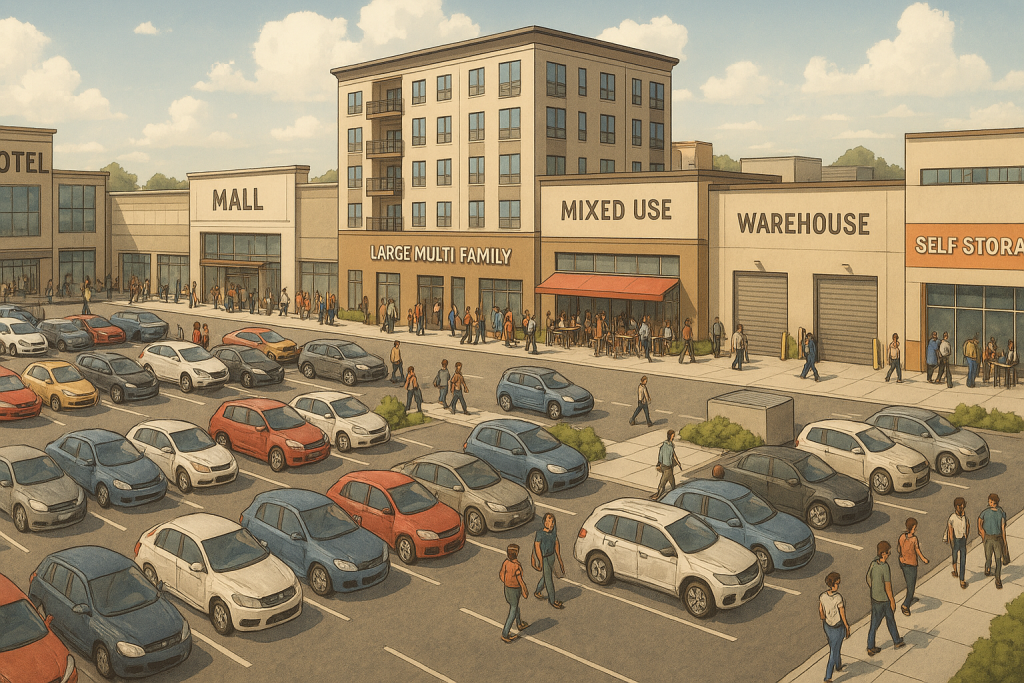
Pennsylvania’s New 20-Year LERTA Abatement for Building-to-Housing Conversions
Pennsylvania enacted an amendment to The Fiscal Code (Act of Nov. 12, 2025, P.L. 156, No. 45; HB 416) creating a targeted pathway to extend certain Local Economic Revitalization Tax Assistance (LERTA) property-tax exemption schedules from the long-standing 10-year cap to up to 20 years.
The key design point is that this is not a new statewide “automatic” tax break: it is enabling authority that local taxing bodies must implement through local ordinances/resolutions under LERTA’s existing framework (including public process and designated “deteriorated areas”).
The November 2025 change matters for adaptive reuse because it (1) explicitly supports residential conversion of hard-to-reuse, underutilized buildings in a first-class city and (2) lengthens the maximum LERTA schedule in Pennsylvania’s second-class city/county—where downtown office distress and conversion policy have already been central.
Affordability is not mandated in the state fiscal-code amendment itself, but localities can (and in at least one prominent example do) require affordable set-asides or job creation as a condition of receiving enhanced abatements—meaning the affordability outcome will be driven largely by local ordinance design, underwriting norms, and complementary subsidy tools (LIHTC, historic tax credits, gap financing, etc.).
Legal authority and what changed in the November 2025 budget
The operative fiscal-code section and effective date
Act 45 of 2025 added Section 1799.41-E (“Local Economic Revitalization Tax”) to The Fiscal Code.
The act’s effective-date clause states that (with limited exceptions not relevant here) “[t]he remainder of this act shall take effect immediately,” meaning Section 1799.41-E was effective upon enactment on November 12, 2025.
What the new authority actually does
LERTA (Act 76 of 1977) generally authorizes local taxing authorities to exempt the assessed valuation attributable to improvements (and certain new construction) in designated deteriorated areas, but it limits the “schedule of taxes exempted” to not exceed 10 years.
Act 45 creates two distinct “20-year” pathways by overriding that 10-year cap in specified places and/or use-cases:
- Second-class county or second-class city: the schedule length under LERTA “shall not exceed 20 years.”
- First-class city (targeted to residential conversion): for “improvements that convert deteriorated property into residential housing units,” the schedule length “shall not exceed 20 years.”
To ground this in Pennsylvania’s municipal classifications: Pennsylvania statute classifies cities by population, with “cities of the first class” defined as at least 1,000,000 residents and “cities of the second class” as at least 250,000 but less than 1,000,000.
Counties are likewise classified by population; a “second class” county is defined as 1,000,000 to under 1,500,000 residents.
In practice, this maps to the core examples in your request:
- A first-class city pathway closely aligns with Philadelphia’s situation.
- A second-class city/county pathway aligns with the Pittsburgh / Allegheny County context.
How this sits inside LERTA’s existing structure
The fiscal-code change does not replace LERTA’s basic mechanics; instead, it changes one key constraint (maximum schedule length) in certain places/uses. LERTA still:
- defines core terms (e.g., “improvement,” “local taxing authority”),
- requires municipal designation of deteriorated areas with public hearing(s),
- ties eligibility and benefit to assessed value attributable to improvements/new construction (not land), and
- uses an exemption “schedule” set locally (often a phase-in over time).
Eligibility, definitions, and geographic limits
Statutory building types captured by the November 2025 amendment
Section 1799.41-E includes a new definition of “deteriorated property” for purposes of this fiscal-code section. In short, it reaches the building categories you flagged—commercial/industrial/factory-type uses—and explicitly includes certain former government properties (including schools) and even contemplates demolition in some circumstances.
A key excerpt (quoted narrowly for precision) defines deteriorated property to include: “any industrial, commercial or other business property, or property previously used for government purposes, including a school … located in a deteriorating area.”
It also includes property under an order to “be vacated, condemned or demolished” for code noncompliance and property “no longer in use” that “must be demolished to make residential use economically viable.”
“Deteriorating area” and situs/geographic limits
The fiscal-code section requires that eligible deteriorated property be located in a “deteriorating area,” but LERTA’s underlying statute provides the operative framework for how those areas are set: before adopting the ordinance/resolution authorizing exemptions, the municipal governing body must “affix the boundaries of a deteriorated area or areas” and hold at least one public hearing, considering criteria that include unsafe/unsanitary/overcrowded buildings, vacant lots, tax delinquency concentrations, defective design/layout, and other economically or socially undesirable land uses (alongside cross-references to “blighted” and “impoverished” area criteria in other state statutes).
Thus, geographic eligibility is a two-layer test:
- the project must be in the correct city/county class for the 20-year cap to be available, and
- the site must lie within locally designated LERTA deteriorated area boundaries.
Table comparing eligible building types and eligibility logic
| Building / site condition (practical category) | Explicitly included in Fiscal Code §1799.41-E definition? | How it maps to common conversion targets | Key statutory hook |
|---|---|---|---|
| Vacant/underused office building | Yes, if it qualifies as “commercial … or other business property” and meets deteriorated-area / deterioration conditions | Office-to-apartment conversions in CBDs | “industrial, commercial or other business property” |
| Industrial / factory / warehouse | Yes, as “industrial … property”; can support mixed-income residential reuse if zoning/feasibility allow | Industrial-to-residential adaptive reuse, often with remediation needs | “industrial … property” |
| Former public school building | Yes (“government purposes, including a school”) once in eligible ownership and area | School-to-housing conversions; significant rehab cost but strong community demand | “government purposes, including a school” |
| Former government facility (e.g., offices, stations) | Yes (“property previously used for government purposes”) | “Civic building” conversions; often structurally sound, costly interior reconfiguration | “government purposes” |
| Property under vacate/condemn/demolition order | Yes | Captures buildings where conversion is urgent, hazardous, or code-driven | “order … requiring the unit to be vacated, condemned or demolished” |
| Demolition + new residential build (when conversion infeasible) | Yes, in limited terms (“must be demolished to make residential use economically viable”) | “tear-down to housing” pathway for functionally obsolete structures | “must be demolished to make residential use economically viable” |
Local adoption and administration in practice
The LERTA opt-in mechanics that localities must still follow
LERTA’s statute makes clear that exemptions are granted via local lawmaking:
- A “local taxing authority” (including counties, municipalities, and school districts) may grant exemptions by ordinance or resolution.
- Before authorizing exemptions, the municipal governing body designates deteriorated-area boundaries after at least one public hearing.
- A property owner seeking exemption must notify each granting taxing authority when securing a building permit (or when commencing work if no permit is required); the assessment agency then separately assesses the improvement after completion and calculates the eligible assessment for the exemption schedule.
Critically, LERTA also states that the exemption schedule and eligible cost rules “existing at the time of the initial request” apply to that request, and later amendments generally do not retroactively apply to earlier requests—an important predictability feature for capital markets.
Local examples and implementation status
Pittsburgh / Allegheny County
The Downtown Pittsburgh “LERTA” effort has been designed explicitly around conversion feasibility and public benefits.
- City-side program design (including a 20-year “enhanced” option): The City of Pittsburgh’s published summary of amended tax abatement programs (last updated 02/25/2026) lists, for “Commercial, industrial, residential, or other business structures located in Downtown Pittsburgh,” a “Tax Exemption E” option with a 20-year length and a requirement to submit documentation of affordable units and/or full-time-equivalent positions created.
- County-side description of a three-taxing-body Downtown LERTA: Allegheny County describes Downtown LERTA as a collaboration among the Pittsburgh School District, Allegheny County, and the City of Pittsburgh, with key features including a three-year application window, annual abatements (with caps per taxing body), and eligibility routes tied to affordable housing set-asides (e.g., 10% of units affordable at ≤50% AMI or 60% at ≤80% AMI) or job creation.
- State-law trigger: City Council messaging in December 2025 explicitly credited the state change in maximum schedule length as enabling the extension from 10 to 20 years for Downtown LERTA, describing the change as effectively “automatic” given how the local legislation was drafted to key off the state maximum.
These sources collectively show not only the existence of multi-jurisdictional administration, but also the emerging pattern that localities may trade longer terms for affordability/job requirements—a central policy design lever for making conversions “especially affordable” rather than simply feasible.
Philadelphia
In Philadelphia, the November 2025 state change is widely described as new enabling authority that still requires City Council action:
- Local reporting immediately after enactment emphasized that the 20-year conversion abatement is “now up to City Council” and that local officials must define the “deteriorating area” geography for eligibility.
- Coverage of the 2026 legislative agenda similarly framed the state amendment as enabling a “limited program” and described the definition of deteriorated property in terms consistent with the statutory text (commercial/industrial/government—including schools—in a deteriorating area).
- A December 2025 state-senate release reiterated that the abatement “must be approved by City Council” and described the policy as designed to reduce taxes on newly added/improved value to facilitate building-to-housing projects.
A useful historical note for policy designers: Philadelphia previously enacted a time-limited conversion abatement in the late 1990s that required substantial vacancy and/or building age tests (e.g., 66⅔% vacancy in the conversion area; vacancy duration or 50+ years since first occupancy) and imposed tax-delinquency compliance and revocation mechanics—though that provision included a termination date (June 30, 2002) and was not a permanent modern framework.
Required approvals and typical timeline
The following diagram synthesizes the statutory sequence embedded in LERTA (designation → ordinance/resolution → permit-stage application → post-completion assessment → abatement schedule).
flowchart TD
  A[State enabling law in effect\n(Fiscal Code §1799.41-E)] --> B[Municipal governing body designates\n"deteriorated area" boundaries\n+ holds public hearing]
  B --> C[Each local taxing authority opts in\nby ordinance/resolution\n(city/municipality, county, school district)]
  C --> D[Developer/owner applies at building permit\n(or at construction start if no permit)]
  D --> E[Construction / rehab / conversion\n(or demolition + residential build if eligible)]
  E --> F[Assessment agency separately assesses\nimprovement/new construction value]
  F --> G[Exemption schedule applied to\neligible incremental assessment\nfor up to 5/10/20 years, per local law]
  G --> H[Ongoing compliance + reporting\n(affordability/job criteria if required)]
Fiscal impacts and revenue trade-offs
What is (and is not) being abated
A recurring misconception is that a LERTA-style abatement makes a property “tax free.” In fact, LERTA is generally structured to exempt the assessed value attributable to improvements/new construction, not the pre-existing land/structure value.
This distinction matters for fiscal impact:
- the “base” assessment continues to generate property tax revenue, while
- the “increment” (the newly created assessed value from conversion/rehab/new build) is phased into taxation per the local exemption schedule.
Why schools are central to the fiscal debate
In Pennsylvania, property tax is a core revenue source for school districts and local governments, and LERTA explicitly contemplates participation by school districts as “local taxing authorities.”
Where multiple taxing bodies share a property tax base (commonly municipality + county + school district), an abatement’s real fiscal bite depends on which authorities opt in and whether the local design includes caps.
Downtown Pittsburgh provides an example of an approach intended to manage that trade-off: Allegheny County’s description emphasizes that “existing taxes are not abated” and that annual abatements may be capped per taxing body.
Table comparing municipal adoption steps (with fiscal-control points)
| Step | Who controls it | Fiscal-control lever (why it matters) | Primary legal basis |
|---|---|---|---|
| Designate deteriorated area boundaries + hearing | Municipal governing body | Can target truly distressed geographies (reduces “windfall” risk) | LERTA §4 (hearing + criteria) |
| Adopt LERTA ordinance/resolution (each taxing body) | City/municipality, county, school district | Each body can choose to participate, set schedule, set caps, and set eligibility conditions | LERTA §4(a), §5; definition of “local taxing authority” |
| Define exemption schedule length (5/10/20 yrs) and phase-in | Each participating taxing body | Directly determines foregone revenue magnitude and timing | LERTA §5; Fiscal Code §1799.41-E modifies max |
| Application timing (permit-stage) | Developer + local administering offices | Locks in rules “at time of initial request,” improving predictability but limiting later policy changes | LERTA §6 |
| Post-completion separate assessment of improvements | Assessment agency | Ensures only incremental value is eligible; affects tax-base measurement | LERTA §6 |
| Compliance monitoring (if local conditions exist) | Local administering agency | Protects public benefit (affordability/job creation) and enables clawbacks | Local program rules (e.g., Downtown PGH) |
Modeled revenue impacts under 5-, 10-, and 20-year schedules
The fiscal-code change increases the maximum schedule length to 20 years in specified places/uses; it does not mandate a particular phase-in structure.
However, a common LERTA pattern is a linear phase-in, where the improvement’s taxable portion increases by equal increments each year (often described locally as “base + 10% of the increment per year” on a 10-year schedule).
Below is a simple illustrative model (not a forecast) showing cumulative property tax revenue forgone on the incremental assessed value only, assuming:
- incremental assessment created by conversion: $10,000,000
- combined property tax rate (city + school + county): 30 mills (3.0%)
- annual tax on the increment if fully taxable: $300,000/year
- linear phase-in schedules:
- 5-year: 100%, 80%, 60%, 40%, 20% exempt
- 10-year: 100% → 10% exempt
- 20-year: 100% → 5% exempt
These assumptions are intended to show direction and scale of schedule-length choices under a typical LERTA-style phase-in logic, not to estimate any specific project’s real taxes.
| Schedule length | Cumulative exempt “multiplier” on annual increment-tax (T) | Cumulative forgone tax (City+School+County) |
|---|---|---|
| 5 years | 3.0 × T | $900,000 |
| 10 years | 5.5 × T | $1,650,000 |
| 20 years | 10.5 × T | $3,150,000 |
A key policy inference supported by national conversion literature is that longer abatements can be decisive for feasibility in weak-rent or high-cost contexts, but they also increase the period during which local governments forgo incremental revenue—hence the growing use of caps, benefit targeting, and affordability/job conditions.
Affordability and capital stack implications
Is affordability required by the state’s 20-year authorization?
Section 1799.41-E, as enacted in November 2025, extends schedule length and defines eligible “deteriorated property,” but it does not itself impose an affordability set-aside or affordability duration requirement.
That said, it does explicitly allow local taxing authorities (in the first-class city subsection) to adopt “requirements applicable to the construction of improvements,” with an outer bound that such requirements “shall be no more restrictive than” a separate Fiscal Code provision.
The referenced benchmark provision requires contractors/subcontractors to maintain valid licenses/registrations and comply with workers’ compensation law, unemployment compensation law, and Pennsylvania’s prevailing wage act.
This text is best read as addressing construction compliance/labor standards rather than affordability design; affordability conditions (where adopted) appear to arise primarily through local program structuring.
Local affordability incentives and requirements
Pittsburgh’s published program summaries demonstrate how affordability can be built into enhanced abatements:
- The City of Pittsburgh summary lists enhanced options that require affordable-unit thresholds at 50% AMI or 80% AMI (or job creation), and it lists a Downtown program option with a 20-year term conditioned on documentation of affordable units and/or jobs.
- Allegheny County’s Downtown LERTA description similarly ties eligibility to affordable set-asides (10% at ≤50% AMI, or 60% at ≤80% AMI) or job creation, and includes per-taxing-body cap concepts to manage fiscal exposure.
Philadelphia’s public discussion has emphasized using the 20-year authority to support affordable housing goals, but the precise mechanism remains dependent on City Council legislation and ordinance details.
Financing and underwriting mechanics: why 20 years can change feasibility
National research consistently finds that office-to-residential conversion is often constrained by high retrofit costs, building geometry/structure, and weak rent support in some submarkets—making policy incentives (including tax abatements) relevant to closing feasibility gaps.
From a pro forma standpoint, a longer property-tax abatement typically:
- lowers operating expenses (property tax on the incremental assessment), improving stabilized net operating income and debt service coverage, and therefore can increase debt capacity or reduce required equity;
- reduces the “tax shock” that can otherwise occur when a large conversion triggers reassessment;
- can be treated as more “bankable” when the exemption runs with the property and does not terminate on sale (a feature present in LERTA and reflected in local conversion-abatement history).
How this interacts with major affordable-housing and redevelopment tools
LIHTC (Low-Income Housing Tax Credit). PHFA describes LIHTC as a federal Section 42 tax incentive for owners of affordable rental housing, and PHFA’s Qualified Allocation Plan / guidelines govern application and underwriting processes for 9% credits (competitive rounds) and 4% credits with tax-exempt bonds (rolling, with parameters).
A 20-year abatement can improve feasibility for LIHTC conversions by lowering operating costs—potentially enabling deeper affordability, larger reserves, or reduced ongoing subsidy needs—though project-by-project outcomes depend on local assessment, rents, and underwriting standards.
Historic tax credits. Brookings’ policy-lever discussion notes the federal historic preservation tax credit (HPTC) as a commonly used tool in office-to-residential conversion and describes it as a 20% federal income tax credit for qualifying rehabilitation/conversion costs—often monetized via tax credit equity.
Layering HPTC equity with a longer local property-tax abatement can be especially important for older buildings that are physically convertible but financially marginal.
Brownfield and industrial remediation. For conversions involving legacy industrial sites, Pennsylvania’s DCED Industrial Sites Reuse Program provides grant and low-interest loan financing for environmental site assessment and remediation at former industrial sites.
DEP’s materials describe Pennsylvania’s land recycling/brownfield framework (including Act 2 and related liability protections) and provide resources on brownfield assistance and funding—often relevant when industrial properties are candidates for residential reuse.
Criticisms, risks, and best-practice safeguards
Common criticisms and risks
Revenue loss and equity concerns. Extensive analysis of Philadelphia’s existing tax-abatement landscape (separate from this new 20-year authority) has highlighted that abatements can materially affect city and school district revenues, raising perennial questions about distributional equity and opportunity cost.
National conversion discussions similarly point to reduced tax revenues and the need for carefully designed incentive packages.
Windfalls and mis-targeting. If deteriorated-area boundaries are too broad or eligibility is insufficiently tied to real market failure, abatements can subsidize projects that would likely occur anyway. Allegations of insufficient scrutiny and “default” approvals have appeared in local critiques of LERTA programs, underscoring the importance of transparent evaluation criteria.
Affordable-housing underdelivery. Conversion pipelines nationally tilt heavily toward market-rate outcomes unless affordability requirements or complementary subsidies are embedded.
Construction and compliance risk. Conversions can involve complex code issues, structural constraints, and remediation; localities sometimes respond with compliance requirements. The fiscal-code cross-reference to contractor licensing and compliance with workers’ compensation, unemployment compensation, and prevailing wage law signals state attention to baseline construction compliance in at least one pathway.
Recommended best-practice policy design and community safeguards
The following recommendations synthesize statutory levers in LERTA, observed local program design (Downtown Pittsburgh), and national conversion policy research emphasizing targeted incentives, transparency, and alignment with affordability goals.
Target eligibility tightly to demonstrable distress and conversion difficulty. Use deteriorated-area boundary setting and program eligibility tests (vacancy duration, condemnation/health-and-safety triggers, building obsolescence) to avoid subsidizing strong-market, low-need projects.
Trade longer terms for enforceable public benefits. If 20-year schedules are offered, pair them with:
- affordability set-asides (e.g., AMI-based thresholds),
- job-creation thresholds, or
- other measurable community benefits,
following the pattern used in Downtown Pittsburgh’s multi-jurisdictional LERTA framing.
Cap annual abatement exposure per taxing body and preserve “base” revenues. Per-taxing-body annual caps and explicit non-abatement of existing taxes are tools to reduce fiscal volatility and protect core services (especially schools).
Build in compliance monitoring, clawbacks, and anti-abuse rules. Philadelphia’s historical conversion abatement provides a template for:
- tax-delinquency checks,
- revocation authority upon nonpayment/nonuse, and
- ongoing verification requirements—tools that can be modernized for affordability compliance and anti-displacement safeguards.
Align the abatement with the financing stack early. The strongest outcomes typically occur when abatements are integrated with:
- LIHTC underwriting and extended affordability requirements,
- historic-tax-credit strategies for eligible older buildings,
- remediation financing for industrial assets, and
- local gap financing tools (soft debt, grants, or other subsidies) that can address upfront costs more directly than long-horizon tax relief alone.
Institutionalize transparency and evaluation. Public reporting on approved projects, foregone revenue, achieved affordability/job outcomes, and neighborhood impacts reduces the risk of “black box” abatements and responds to critiques raised in controller/auditor-style reviews of tax subsidy programs.